From Numb to Noticing: Creative Recovery Starts Small
You used to love creative things.
Or at least, you didn’t actively avoid them.
Now the idea of sitting down to draw, paint, or make anything feels oddly heavy. Not because you don’t care, but because you’re tired. And busy. And holding a lot together.
If that sounds familiar, you’re not alone.
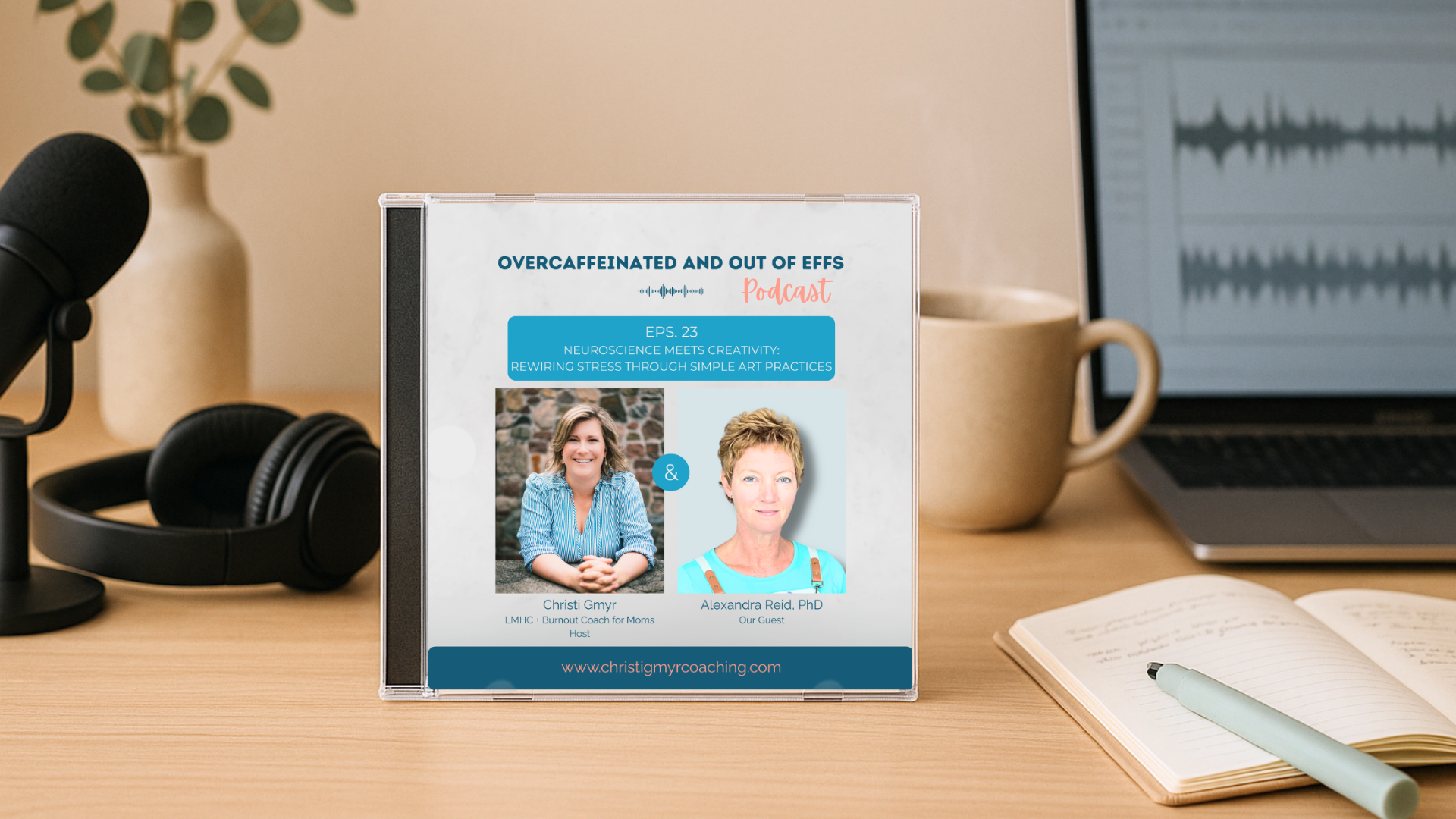
When I joined the Overcaffeinated and Out of Effs podcast, we talked about burnout, caregiving, high-pressure work, and the moment when you realise you’ve slowly disconnected from yourself. Not in one dramatic collapse, but gradually, bit by bit, until even the things that used to help no longer feel accessible.
This post is for the women who are running on caffeine and determination. The ones who are capable, responsible, and quietly depleted.
Burnout Rarely Arrives All at Once
Burnout doesn’t usually show up as a single breaking point. More often, it sneaks in slowly.
For me, it happened during the pandemic. I was working in quality and regulatory affairs for a medical device company that had just secured a government contract to develop emergency ventilators. The work was urgent, meaningful, and relentless. At the same time, my kids were suddenly home, navigating online school, new systems, and constant uncertainty.
I was working from my bedroom. My husband was working from home too. Everyone was stressed. The days blurred together.
What surprised me most was not how busy I felt, but how numb I became. I started losing patience more easily. I felt disconnected from my family. Even my art studio, which had always been a place of refuge, felt inaccessible. I would walk in, look at my supplies, and feel completely blocked.
That was my turning point. Not because something exploded, but because something disappeared.
The Moment I Picked Up a Pen
One afternoon, while sitting on a Zoom call, I absentmindedly started drawing spirals on a piece of paper. Nothing intentional. Just circles, over and over.
And something shifted.
I felt calmer. Not fixed. Just slightly more present. Less reactive.
That moment sent me down a path of curiosity. I started reading about mindfulness, neuroscience, and art therapy-inspired practices. I learned that repetitive, rhythmic mark making helps move the nervous system out of fight-or-flight and into a more regulated state.
Your attention moves to your hand. Your breathing slows. Your body gets the message that it’s safe to settle.
It wasn’t about making art. It was about creating a pause.
Why Creativity Helps When You’re Burned Out
When you’re chronically stressed, your brain is busy scanning for threats. That’s not a great state for reflection, creativity, or problem-solving.
Simple creative practices work because they do a few important things at once:
- They give your attention somewhere gentle to land
- They introduce rhythm, which helps the nervous system downshift
- They create small moments of choice, which re-engage the thinking brain
Choosing a colour. Deciding where a line goes. Noticing a sensation.
These aren’t big decisions, but they are regulation reps. They help untangle mental noise without forcing insight.
This is why I frame creative prompts as experiments, not tasks. There is nothing to get right. Nothing to finish. Nothing to perform.
“But I’m Not Creative”
About half the women I work with tell me they aren’t creative.
And then they draw anyway.
The drawings are simple. Stick figures. Symbols. Waves. Suns. Bridges. Hearts. They look more like infographics than fine art. And that’s exactly the point.
One exercise I often use is called Bridging the Gap. You draw where you are now on one side of the page, where you want to be on the other, and the bridge in between.
What matters is not how it looks, but what you notice.
One woman drew herself crossing choppy waves, then laughed when she realised she couldn’t swim. Another noticed she hadn’t drawn herself on the bridge at all.
These drawings hold emotional information. They create a visual snapshot of what you’re carrying, often before you have words for it.
When You Only Have Two Minutes
One of the biggest barriers women name is time. Or rather, the lack of it.
If you only have two minutes, that’s enough.
Try this:
- Take three slow breaths in through your nose and out through your mouth
- As you breathe, draw loops or lines that follow your breath
- Let your attention rest on the movement of your hand
That’s it.
You’re not adding something new to your to-do list. You’re creating a brief reset inside something you’re already doing.
You can also:
- Draw while waiting in the car
- Doodle instead of scrolling
- Sketch what you see around you while sitting in an arena, on a bus, or in a parking lot
The goal is to lower the barrier to entry. Use a cheap notebook. A pen you don’t care about. Leave them where you’ll see them. This is not precious work. It’s supportive work.
What Changes Over Time
In the creative reset programs I run, women meet weekly for reflection and art therapy-inspired practices. Over time, a few themes come up consistently.
Women report:
- More clarity about what matters
- A renewed sense of energy
- Greater emotional awareness
- A stronger sense of permission to rest
- Small but meaningful boundary shifts
One woman realised she didn’t actually have to be responsible for dinner every night. Another noticed how often she imposed expectations on herself without questioning them.
The creative practices didn’t tell them what to change. They created the space to notice.
A Simple Creative Prompt to Try
If you want to experiment, try this favourite day prompt:
- Grab a piece of paper and a few markers or pens
- Think about a day that feels good, not perfect
- Draw the feeling of that day using colour, shapes, or symbols
You might notice that your favourite day doesn’t involve anything extravagant. Often, it’s quiet. Simple. Grounded.
Once you’re done, place the drawing somewhere visible. Let it remind you what fills your cup.
A Few Questions to Reflect On
You might gently ask yourself:
- Where do I feel most tense in my body right now?
- What helps me feel even slightly more settled?
- What would a small pause look like today?
There’s no need to answer perfectly. Curiosity is enough.
A Gentle Invitation
If this resonates, you don’t need to overhaul your life. You don’t need to become an artist.
You can start small.
You’re welcome to:
- Subscribe to The Creative Shift, my weekly newsletter with short creative wellness prompts
- Try the 5-Day Creative Reset Challenge, a free series of five-minute practices you can do at your own pace
Burnout doesn’t mean something is wrong with you.
It means you’ve been carrying a lot.
Sometimes, the most supportive thing you can do is give yourself a moment to pause, breathe, and make a few marks on paper.