Creative Tools to Reset a Burned Out Mind
There’s a particular kind of exhaustion that doesn’t come from doing too little. It comes from doing too much, for too long, without meaningful recovery.
If you’re a high-achieving woman used to solving problems and carrying responsibility, this kind of fatigue can be hard to name. You might still be capable. Still meeting expectations. Still showing up.
But underneath it all, something feels strained. Decisions take more effort. Small tasks feel heavier than they used to. You hesitate in places where you once felt steady.
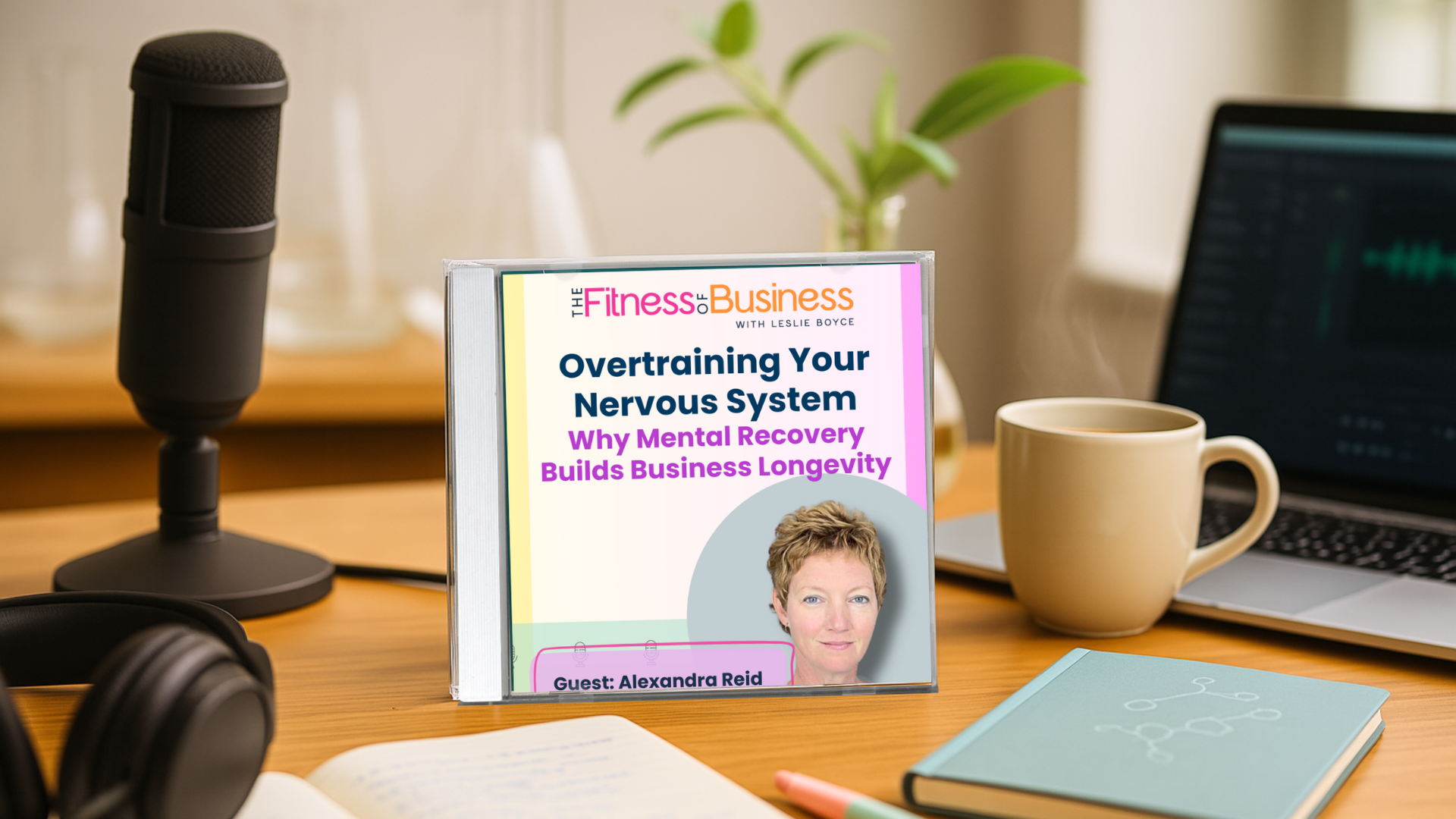
In my conversation with Leslie Boyce on The Fitness of Business podcast, we explored why this hesitation is often misunderstood. Many women assume it means they lack confidence or discipline. In reality, it’s often a sign that the nervous system has been pushed past its capacity to recover.
This matters not only for work, but for well-being. Because when your nervous system is overloaded, no amount of motivation or positive thinking will create clarity. What’s needed first is recovery.
When Skill Isn’t the Issue
Most of the women I work with are deeply capable. They’re analytical, thoughtful, and used to operating under pressure. Many come from STEM backgrounds where precision, responsibility, and problem-solving are part of daily life.
Over time, though, constant mental effort without recovery leads to overtraining. The nervous system stays in a heightened state, scanning for problems, anticipating risk, and preparing for the next demand.
This can look like overthinking or irritability. It can feel like always being on edge. It can also show up as avoidance. Putting off decisions. Delaying conversations. Second-guessing things you once handled with ease.
These are not personal shortcomings. They’re signals.
And signals respond best to regulation, not pressure.
How Burnout Quietly Took Hold
My own relationship with burnout didn’t begin in business. It began much earlier.
I’ve always loved both science and art. When it came time to choose a career path, I followed the advice many women receive. Choose something practical. Something stable.
I studied biology, completed a master’s degree, a PhD, and a postdoctoral fellowship. I worked in research, not-for-profits, government, and eventually medical device development.
During the pandemic, my company secured a contract to develop emergency ventilators. The work was meaningful and urgent. It was also relentless. At the same time, my kids were home, navigating online school. The boundary between work and home disappeared.
Looking back, the signs of burnout were clear. Poor sleep. Racing thoughts. A sense of numbness. I began triple-checking work I’d never doubted before.
And perhaps the clearest sign was this. I stopped making art.
When Creativity Goes Quiet
Art had always been my outlet. When I couldn’t access it anymore, I knew something was wrong.
The turning point wasn’t dramatic. One day, during a Zoom call, I picked up a pen and started doodling. Simple lines and shapes. And I noticed my shoulders drop. My breathing slowed. The tension eased slightly.
That small moment sparked a deeper exploration into creativity, coaching, and nervous system regulation. I began to understand that creativity isn’t about output. It’s about regulation, reflection, and recovery.
That insight eventually became the foundation of my work at Mind Art Wellness, where I support women in STEM and high-pressure roles who are burned out, recovering from burnout, or heading toward it without realising.
What Overtraining Looks Like Day to Day
In physical training, most people understand the importance of rest. You don’t build strength by pushing every day without recovery.
Mentally, though, we expect ourselves to perform continuously. Think harder. Respond faster. Make decisions under pressure with no pause built in.
Over time, the nervous system adapts by staying in fight or flight. Everything feels urgent. Even small decisions carry weight. There’s little room for curiosity or creativity.
This isn’t a confidence issue. It’s a regulation issue.
Why Creative Practices Help the Nervous System
Many of the women I work with tell me they aren’t creative. What they usually mean is that they don’t want another thing to be good at.
The creative practices I use are not about talent. They’re about access.
Simple drawing activities help bypass overthinking and bring awareness to what’s happening beneath the surface. Symbols, shapes, and colour act as visual shorthand. They reveal patterns quickly, often before we have language for them.
One common exercise is drawing a bridge between where you are now and where you want to be. Almost without exception, women draw fragile bridges over dangerous waters. Missing planks. Strong currents. Obstacles they hadn’t consciously named.
Seeing this on paper creates insight.
Why does this feel so unsafe?
What support is missing?
What assumptions am I making?
These realisations don’t usually come from talking alone.
Hesitation, Boundaries, and Nervous System Safety
This shows up clearly in conversations about boundaries and pricing.
Many women know they’re stretched too thin or undercharging for their work. They know something needs to change. And yet, every time they try to make a shift, they freeze.
That freeze is often interpreted as self-doubt. More often, it’s a nervous system response to perceived risk.
Making changes requires a sense of safety. Safety grows through small, supported experiences, not force. Confidence follows regulation, not the other way around.
Choosing Sustainability
At Mind Art Wellness, I talk often about sustainability. Not just in work, but in life.
Constant growth without recovery leads to fragility. Over time, it erodes creativity, clarity, and joy.
I’ve had to make intentional choices about where I show up and where I don’t. Consistency matters more than being everywhere. Depth matters more than volume.
This is nervous system care in practice. Choosing steadiness over intensity.
What Recovery Looks Like in Real Life
Mental recovery isn’t passive. It’s intentional.
It looks like pacing yourself instead of sprinting.
Creating boundaries around your energy.
Allowing your work and life to move in seasons.
It also looks like giving yourself permission to enjoy parts of your life again. If nothing feels nourishing, that’s information worth listening to.
A Practical First Step
If you notice yourself hesitating right now, try asking a different question.
Instead of “What’s wrong with me?”
Try “What does my nervous system need to feel safe enough to move forward?”
Sometimes the answer is rest.
Sometimes it’s clarity.
Sometimes it’s support.
And sometimes it’s as simple as slowing down long enough to notice what you’re carrying.
If You’re Ready for a Small Reset
If this resonates, you don’t need to overhaul your life. You don’t need to add more to your plate.
You can start small.
You’re welcome to explore the 5-Day Creative Reset Challenge, a short series of art therapy-inspired practices designed to help reduce mental overload and reconnect you with yourself.
You can also join The Creative Shift, my weekly newsletter where I share grounded insights on creativity, nervous system care, and sustainable ways of living and working.
Longevity, in business and in life, isn’t built by pushing harder.
It’s built by learning when to pause, recover, and trust yourself again.